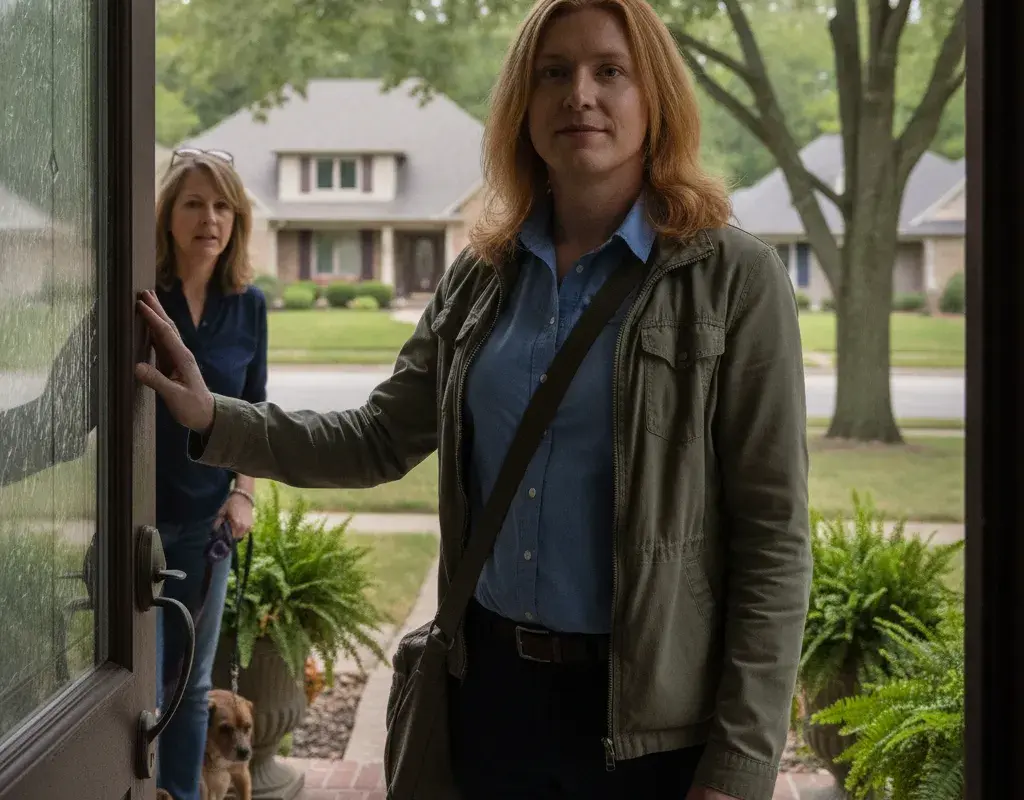
Reneé Luckfield knows that the way she enters a stranger’s life matters. As she walks through the quiet, affluent suburbs of Creve Coeur, Missouri, she avoids the authoritative knock of a police officer, opting instead for a rhythmic tap-tap-tap designed to put homeowners at ease. For Luckfield, a transgender woman leading a regional team for the advocacy group PROMO Missouri, these interactions are deeply personal and often nerve-wracking. She admits that stepping onto these porches isn’t always comfortable, noting that it feels unfair that marginalized people must shoulder the burden of campaigning for their own basic healthcare rights.
The stakes are high as Missourians prepare for midterms featuring a contentious constitutional amendment. The proposal seeks to reinstate a near-total ban on abortion while simultaneously barring minors from accessing gender-affirming care, including hormone therapy and puberty blockers. With polls showing the measure locked in a virtual dead heat—split almost evenly between supporters and opponents—advocates believe the outcome may hinge on small shifts in public perception among undecided voters. To move the needle, PROMO Missouri is employing deep canvassing, a method focused on long-form, empathetic listening rather than quick political pitches.
Unlike traditional campaigning, which often relies on scripts and slogans, deep canvassing encourages activists to engage in transformative conversations. Canvassers ask residents to rate their feelings on various scales and then invite them to explain the stories behind those numbers. By focusing on people who might support abortion access but remain ambivalent about transgender healthcare, Luckfield and her team hope to bridge ideological gaps through shared humanity. They aren’t looking for immediate conversions; they are seeking to create space for nuance in a political climate often defined by extremes.
Despite facing hostility from some residents who view these medical procedures through a lens of religious conviction or parental concern, Luckfield maintains a polite distance when conversations hit an impasse. Her goal is not to argue with those firmly set in their opposition but to find common ground with those still questioning. It is an ambitious undertaking involving tens of thousands of door knocks across several metro areas, all aimed at ensuring that the future of youth healthcare is decided by understanding rather than misinformation.