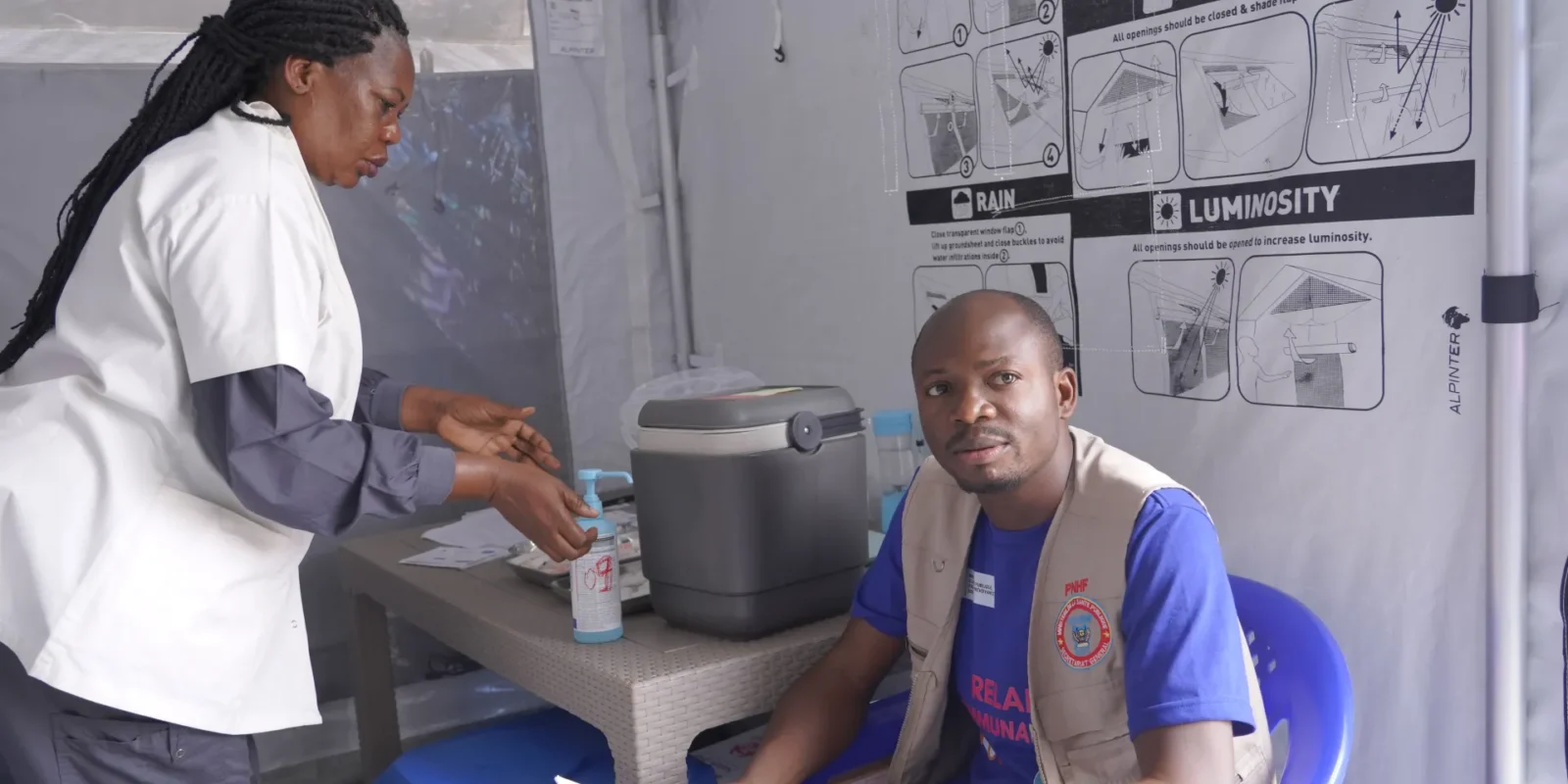
Health workers in the Democratic Republic of the Congo have begun receiving a critical vaccine in a desperate bid to curb the fastest growing Ebola outbreak in history. The rollout launched this past Saturday in Bunia, the capital of Ituri province, which currently serves as the epicenter of the crisis. Provincial Governor Major General Gaby Kasongo Mulumba emphasized that frontline staff are facing extreme exposure while managing the response, making their protection a priority for both local authorities and international partners like the World Health Organization and Doctors Without Borders.
The campaign aims to vaccinate roughly 50,000 health and frontline workers using Ervebo, a vaccine originally designed for the more common Zaire strain of Ebola. However, the current surge is driven by the Bundibugyo virus, for which there is currently no licensed vaccine or proven treatment. Because of this discrepancy, officials are utilizing a compassionate use program to deploy Ervebo despite its lack of specific approval for this strain. To determine how well it actually works against Bundibugyo, about 20,000 recipients will be enrolled in a clinical trial and monitored over the next year.
On the ground in Bunia, medical professionals view the measure as a necessary precaution given the high stakes of their work. Dr. Jeannot Elua noted that healthcare providers essentially have no choice but to accept the jab to continue saving lives. While some staff had previously received earlier versions of vaccines, others are stepping forward now as mandated by health protocols during this unprecedented emergency. This effort will soon expand into North Kivu province, where case numbers have also seen sharp increases recently.
The scale of the tragedy remains staggering, with local authorities reporting at least 3,639 deaths and over 7,500 infections since May. Although some indicators suggest that transmission might finally be slowing down, organizations like Doctors Without Borders warn that there is still no definitive evidence that the epidemic is under control. With thousands having already succumbed to the virus and hundreds more fighting for survival through recovery, these vaccination efforts represent one of the most significant hopes for those standing on the front lines of the battle.