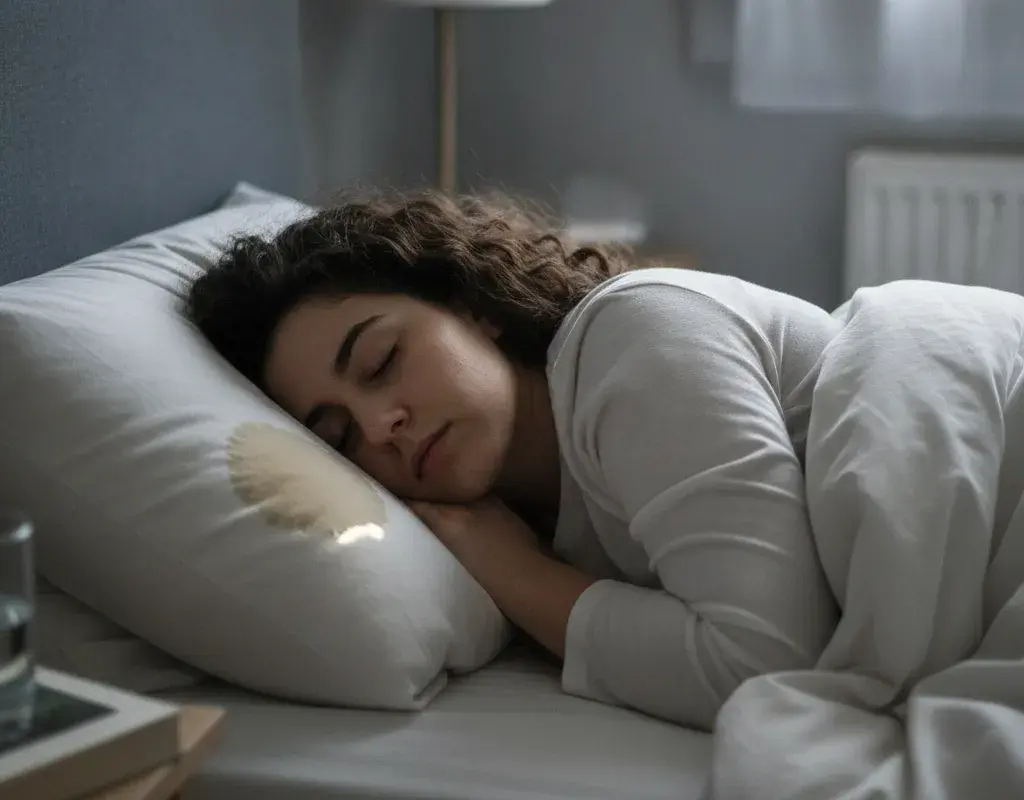
Waking up to find a damp patch on your pillow is a common experience that many people find embarrassing, yet medical experts say it is usually nothing to worry about. According to Dr. Cynthia Odogwu, a family and lifestyle medicine physician, the body continues to produce saliva during sleep, but since we swallow far less frequently while unconscious, that fluid naturally leaks out. For those who sleep on their sides or stomachs rather than their backs, gravity simply does the rest of the work, making occasional drooling a normal part of the human sleep cycle.
While often harmless, frequent drooling can be triggered by simple environmental factors or temporary ailments. Nasal congestion from a cold or seasonal allergies often forces people to become mouth breathers, which dries out the oral cavity and prompts the body to overcompensate by producing more saliva. Similarly, sleeping in an arid climate or under a ceiling fan can create the same drying effect. Even digestive issues play a role; doctors note that acid reflux can kick salivary glands into overdrive as the body attempts to neutralize stomach acid traveling up the esophagus.
In some instances, however, excessive nighttime drooling serves as a red flag for more significant health concerns. Sleep apnea is a primary culprit, as upper airway obstructions force patients to breathe through their mouths throughout the night. Other physical factors, such as an open bite where teeth do not meet properly or improperly fitted dentures, can also prevent the mouth from sealing effectively during deep sleep. Certain medications used for anxiety or psychiatric conditions may either stimulate excess saliva production or impair the swallowing reflex entirely.
The most critical warning signs occur when drooling becomes sudden and persistent. Specialists warn that new or heavy salivation that does not resolve could indicate serious neurological issues affecting muscle control and swallowing coordination, including conditions like Parkinson’s disease. While most wet pillows are just a byproduct of comfort and chemistry, physicians recommend consulting a healthcare provider if these symptoms appear alongside other cognitive changes or severe snoring to rule out underlying disorders.