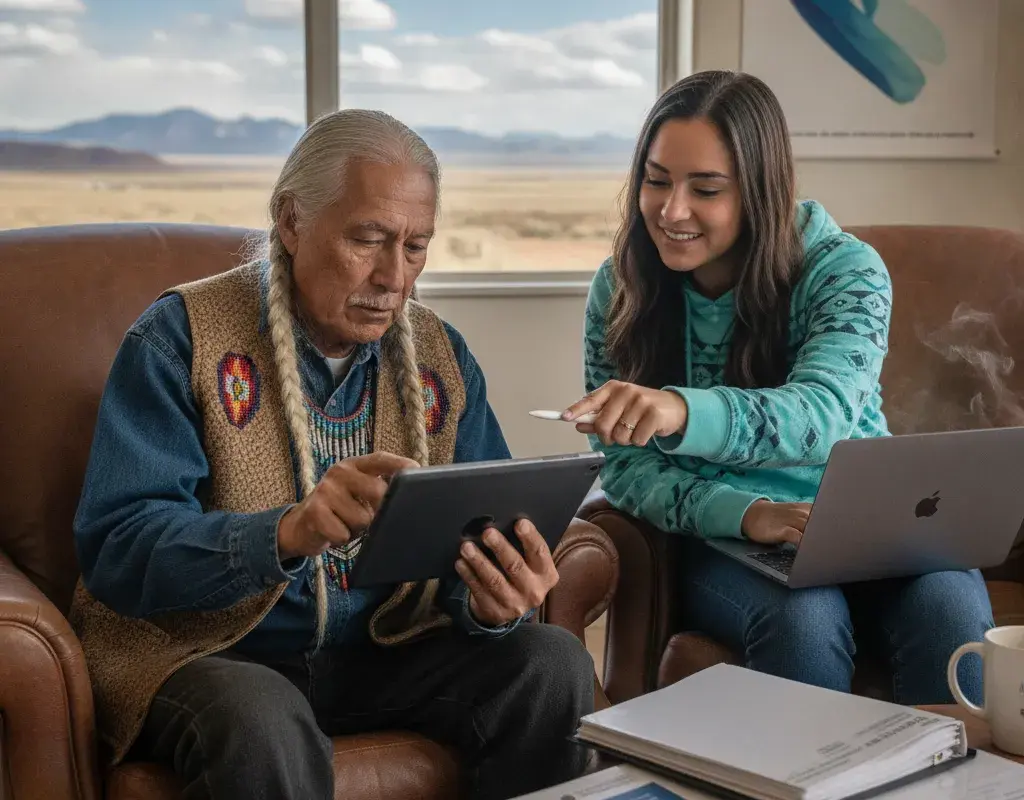
American Indian and Alaska Native veterans have long served their country at rates exceeding the national average, yet many return home to face a secondary battle. From the isolation of rural living to systemic barriers in healthcare, these individuals often struggle with disproportionately high rates of PTSD and suicide. To combat these disparities, experts from the Colorado School of Public Health have teamed up with the VA’s National Center for PTSD Mobile Mental Health to launch the Veterans Wellness Path app, a specialized digital resource designed to bring critical support directly to smartphones.
Unlike standard medical apps, this tool was built through deep consultation with native veterans and their families to ensure it respects cultural nuances. Rene Begay, a senior professional research assistant with the Centers for American Indian and Alaska Native Health and a member of the Navajo Nation, explains that while the project started with a narrow focus on suicide prevention, it evolved into something far more comprehensive. Recognizing that indigenous communities view health as an intersection of mind, body, and spirit, the team shifted toward a holistic model of wellness that addresses the whole person rather than just a diagnosis.
The application guides users through a circular journey divided into several key pillars. One section encourages daily check-ins regarding physical and emotional wellbeing through journaling, while another focuses on balance across various aspects of health. There are dedicated spaces for reconnection with family and traditional culture, alongside an urgent help feature for those in immediate crisis. By blending clinical resources with ancestral wisdom, the developers hope to give veterans a way to feel grounded during their transition back to civilian life.
Attention was paid not only to what the app does but how it looks. Working with artist Walt Pourier of the Oglala Lakota tribe, the team created visuals that resonate across hundreds of different tribes and regions. Users can customize their experience by choosing landscapes that mirror their own homes, whether they are deserts or woodlands. This inclusivity was vital for Begay and her colleagues, who wanted to avoid regional biases and create a welcoming space for all indigenous veterans regardless of their specific tribal affiliation.
This initiative represents a pivotal shift in how veteran services are delivered. According to Cynthia Goss, who leads the project team, earlier efforts focused primarily on training healthcare providers in cultural competency. However, researchers realized there was still a missing link: direct communication between health resources and the veterans themselves. By putting these tools in the palms of their hands, the Colorado School of Public Health is helping ensure that geography is no longer a barrier to recovery and peace of mind.